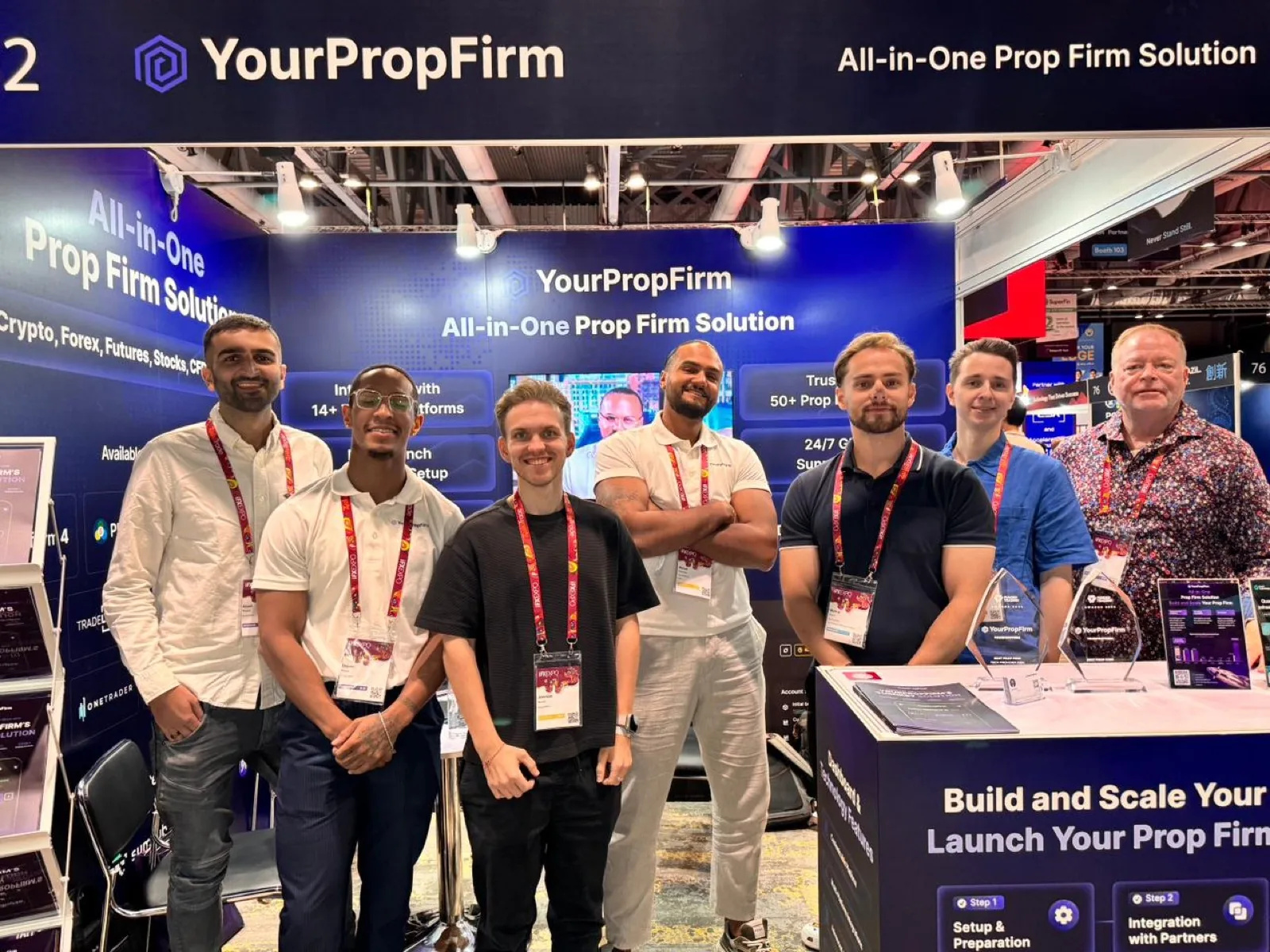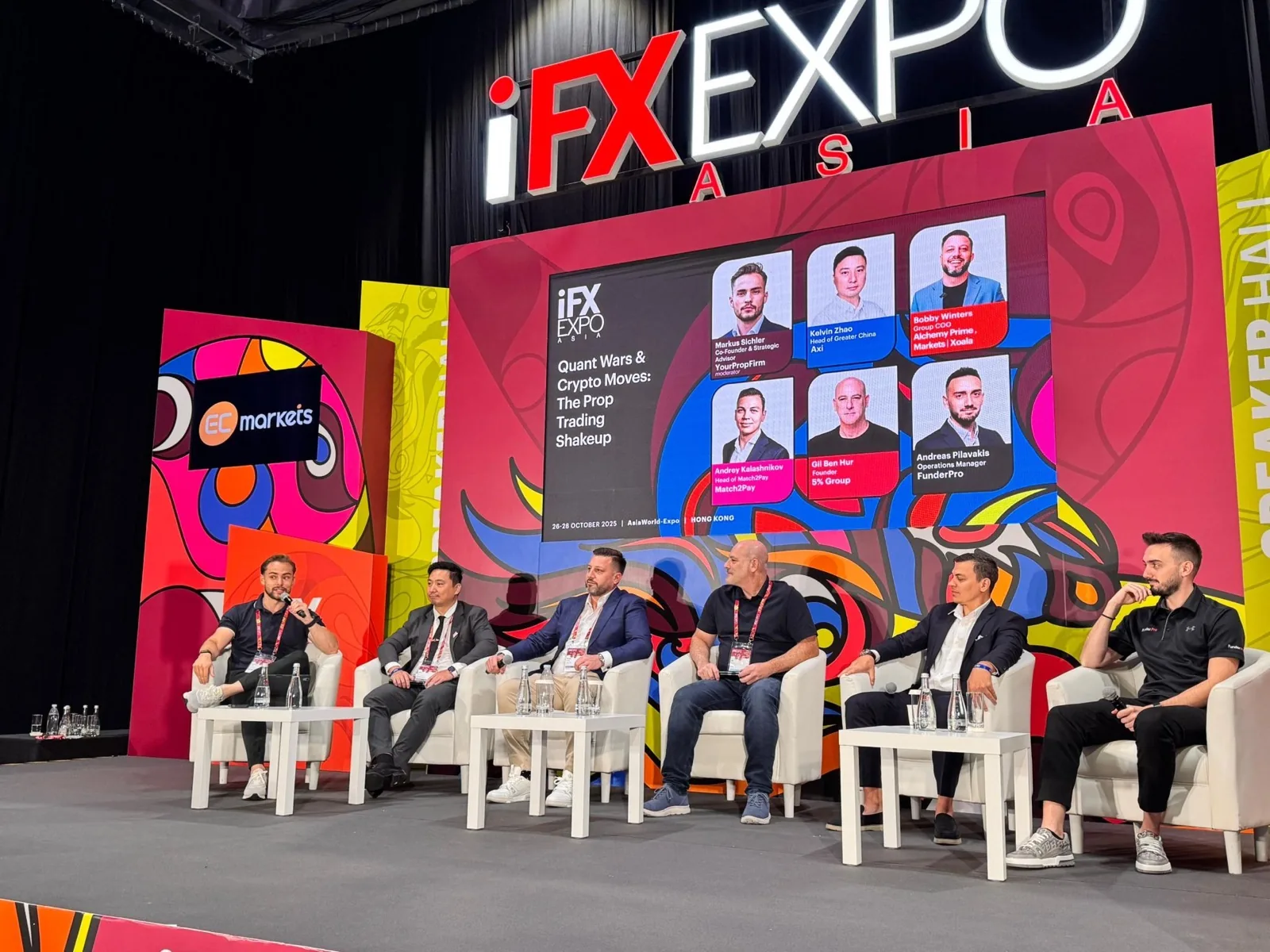
Prop trading is one of the fastest-moving corners of finance, and nowhere is that clearer than in APAC. At iFX EXPO Asia in Hong Kong I had the honour of moderating “Quant Wars & Crypto Moves: The Prop Trading Shake-Up”, a panel built deliberately to mix the B2C operators running firms day to day with the B2B providers that power them.
Watch the full session: iFX EXPO Asia · Hong Kong 2025 · sponsored by EC Markets.
The Panel
I was joined by five people who see the industry from very different angles:
The APAC Landscape
The growth numbers are real. Axi’s prop program alone has attracted more than 30,000 active clients in two years and paid out over $9M in performance fees, roughly half of it from APAC. India sits out in front, followed by Vietnam, Thailand, Malaysia, Indonesia and South Korea, with a young, mobile-first, increasingly sophisticated trader base that is comfortable with automation.
The appeal is structural: prop accounts give traders who can’t deposit large sums the funded capital to turn a disciplined 5–10% monthly return into real income. Not everyone’s map looks the same (some operators still see Europe, MENA and LATAM leading), but no one disputes that APAC is the steepest part of the curve, and the region is well ahead of the rest of the world on crypto.
Quant & Algo Trading
Algorithmic and quantitative trading is rising fast, and the panel’s view was nuanced. On the trader side, the danger is sameness: if one shared algo is run by hundreds of accounts, those traders risk disqualification, and in a live market, copied signals slip and run out of liquidity. Most serious firms now audit strategies, sometimes asking for the code, to confirm a trader genuinely built their own edge.
On the business side, quant cuts both ways. Firms increasingly need analysts who understand the statistics of their trader base (pass rates, consistency, who to hedge to the market), but several panelists cautioned against making proprietary quant the whole strategy unless your risk-management and liquidity discipline is genuinely strong. The recurring theme: welcome automation, but insist on authenticity and audit it properly.
Crypto’s Role
Here the split between trading and deposits matters. As a traded asset, crypto is still a small slice (often 1–2% of volume, cyclical, with gold dominating), though perpetual futures are clearly gaining and some firms are launching crypto-only plans to meet demand.
As a funding rail, the picture is dramatic. In Europe, crypto might be 5–7% of deposits; across APAC it can run 20–40%. With PSPs increasingly treating prop as high-risk, a wave of firms, especially in India and Malaysia, are going crypto-only on deposits to cut costs and avoid chargebacks and frozen funds. Futures-focused operators also argued the futures model has stayed more consistent than the “wild west” CFD race that pushed many firms under.
Payments & Payouts
Because prop sits in a regulatory grey zone, payments remain a genuine pain point. Three years ago a PSP would onboard a firm at 2–3%; today it’s closer to forex pricing, if you can get approved at all. Crypto rails, often 0.4–1% versus 4–5% on cards, are filling the gap for both deposits and instant, uncapped payouts.
The most interesting answers were structural. Bobby’s group went and got an EMI licence in Sweden (Xoala) with crypto rails and Visa/Mastercard principal membership, so they control money in and money out end-to-end, and are experimenting with branded debit cards as a “funded trader” badge. Gil’s take was simpler and just as true: the best payment strategy is great service. Low chargebacks and a clean track record are what actually get you onboarded and keep you there.
"The industry isn’t coordinated, but the abusers are. We all offer the same programs, which makes it easy for coordinated traders to arbitrage one firm against another. The fix isn’t sharing trader data; it’s coordinating, as an industry, on how we tackle abuse."
Gil Ben-HurFounder · The5ers
Fraud & Abuse
Everyone agreed this is prop trading’s Achilles heel. The common patterns are copy trading and hedging/“match trading”, opening many accounts and taking opposite directions, or hedging one firm against another. Within a single environment, firms can build detection for this; the hard problem is cross-firm hedging, where coordinated groups exploit the fact that operators don’t talk to each other.
B2B providers that sit across many firms, like Match-Trade, have a structural advantage here, with the data to spot abuse between entities, plus deposit-side protections against fake-token scams. But the strongest idea on stage was Gil’s call for light-touch industry coordination on abuse, and a reminder that program diversity itself is a defence: when every firm sells an identical challenge, abuse is easier. The constraint is reputational: lean too hard on enforcement and abusers attack your brand, so the real goal is to grow enough genuine traders that the bad actors stand out.
Staying Competitive
The closing question was the one that matters most: how do you future-proof a prop firm in a brutally competitive market? The answers converged.
- 01Don’t buy market share by undermining risk. The race to the bottom on price, draw-downs and targets is exactly what closed so many firms.
- 02Differentiate the product. More program types and models create a healthier market, and make coordinated abuse harder.
- 03Let payouts and traders validate you. Without regulation, paying clients and letting them speak for you is the strongest signal of legitimacy.
- 04Build the whole experience. Education, community and a path to independence, even routing your best traders into copy-trading on a connected brokerage, turn a one-off challenge into a brand.
APAC is driving the next wave of prop trading, crypto is reshaping how firms get funded more than how traders trade, and fraud plus payments remain the defining operational challenges. The firms that last won’t win on the cheapest challenge. They’ll win on risk discipline, differentiated products, real payouts, and a brand traders trust.
Markus is a co-founder at Quant Technology Group, where he helps shape the technology, risk and infrastructure powering modern prop firms and brokers. He speaks regularly on where proprietary trading is heading and how operators build businesses that last.
More from Markus

 Akash Thakrar