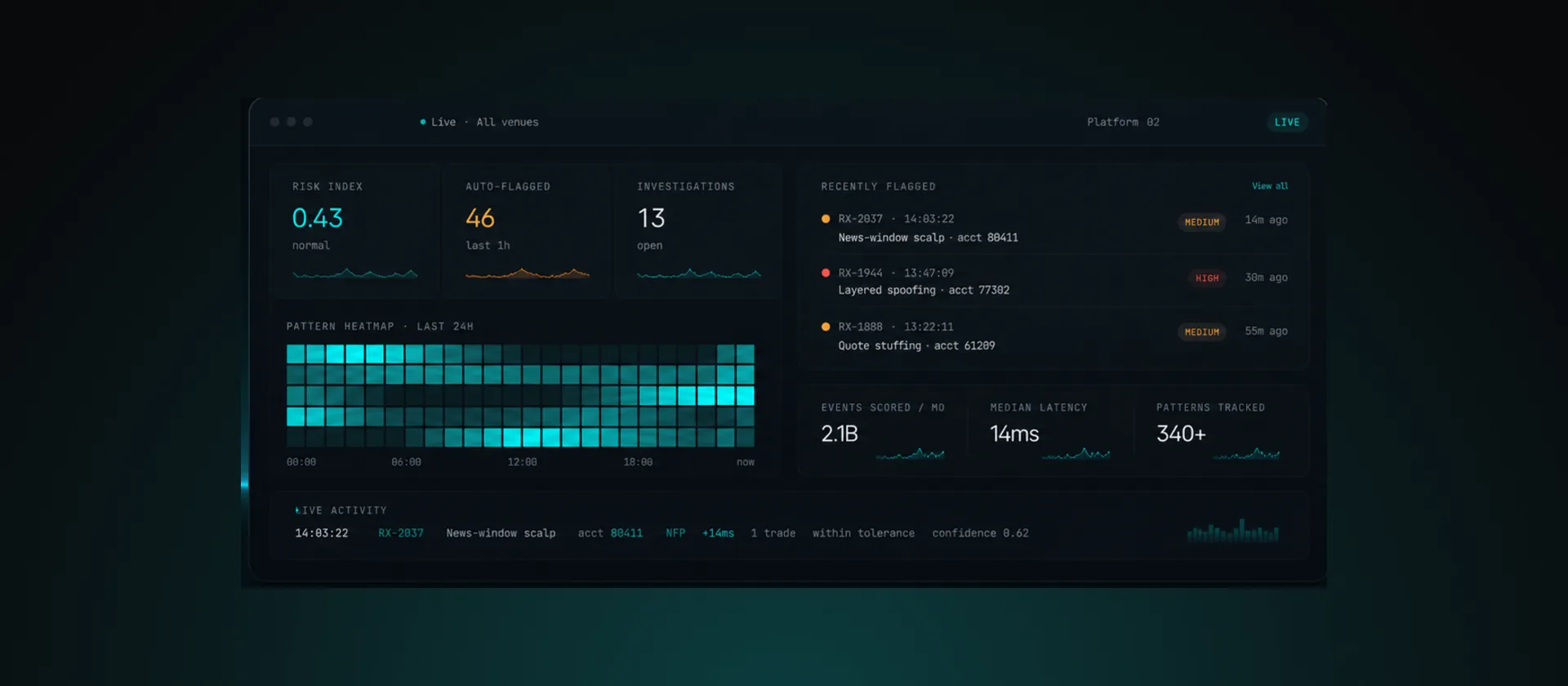
For years, risk management at retail prop firms was treated as a defensive afterthought, a way to catch the obvious cheaters before they drained the payout pool. In 2026 that framing is no longer enough. The firms scaling fastest now treat risk as their most valuable source of business and data intelligence.
The 2026 Shift: From Fraud Detection to Business Intelligence
The retail prop industry professionalized faster than its tooling did. Account volumes exploded, challenge models multiplied, and payout structures grew more complex, while most firms still ran risk on spreadsheets and a part-time analyst. The result was predictable: enforcement drifted, investigations became firefighting, and decisions were made on gut feel rather than data.
What changed in 2026 is the realization that the same data used to catch abuse is the richest dataset a prop firm owns. Every evaluation, every trade, every payout request is a signal, not just about fraud, but about which products convert, which trader cohorts retain, where margin leaks, and which rules quietly push good traders away. Risk stopped being a cost center and became the firm’s analytics backbone.
"The firms winning in 2026 don’t ask ‘did we catch the cheaters?’ They ask ‘what is our data telling us about the business?’ Fraud detection is table stakes. The real edge is turning every risk signal into a decision about your model, for the trader and the operator."
Akash ThakrarHead of Corporate Development · QuantSentry
The Hidden Data Inside Your Prop Firm
Most operators are sitting on answers they’ve never queried. The data exists. It’s just trapped in disconnected platforms, bridges, and payment logs. A dedicated risk function brings it together and surfaces what was previously invisible:
- 01Coordinated behavior across accounts (copy trading, hedging rings, and multi-accounting) that no single-account view can reveal.
- 02Which challenge types and price points actually produce profitable, retainable traders versus one-and-done churn.
- 03Where payout leakage originates, and which rule thresholds are quietly costing margin or driving good traders away.
- 04Early signals of platform abuse, latency arbitrage, and feed exploitation before they hit the balance sheet.
Optimizing for Both Sides: Trader and Operator
Done right, intelligence-led risk management is not adversarial to traders. It improves their experience. When a firm understands its data, it can price challenges fairly, reward genuine skill, resolve disputes with evidence instead of suspicion, and release legitimate payouts faster. Honest traders stop being punished for the behavior of bad actors.
For the operator, the same engine protects capital, sharpens the product roadmap, and makes the business model defensible to partners and regulators. One dataset, optimized for both sides of the relationship.
Why a Dedicated Function, Not a Part-Time Task
Risk reviewed “when there’s time” scales linearly with headcount and breaks the moment volume spikes. A dedicated function, backed by the right infrastructure, scales with the firm instead of against it: consistent enforcement, prioritized investigations, and a continuous feedback loop from data back into the business model. It is the difference between reacting to last month’s losses and shaping next quarter’s strategy.
How QuantSentry Brings It Together
QuantSentry was built for exactly this 2026 reality: a single risk engine that unifies fraud detection, business intelligence, and data analysis across every data point in your prop firm.
In 2026, dedicated risk management is no longer just a fraud shield. It’s the intelligence layer of a prop firm. The operators who treat their risk data as a business asset will out-optimize those who treat it as a cost. QuantSentry is the engine that makes that shift possible.

Akash leads corporate development at Quant Technology Group, where he works at the intersection of risk infrastructure and business intelligence, helping prop firms turn their data into better decisions for traders and operators alike.
More from Akash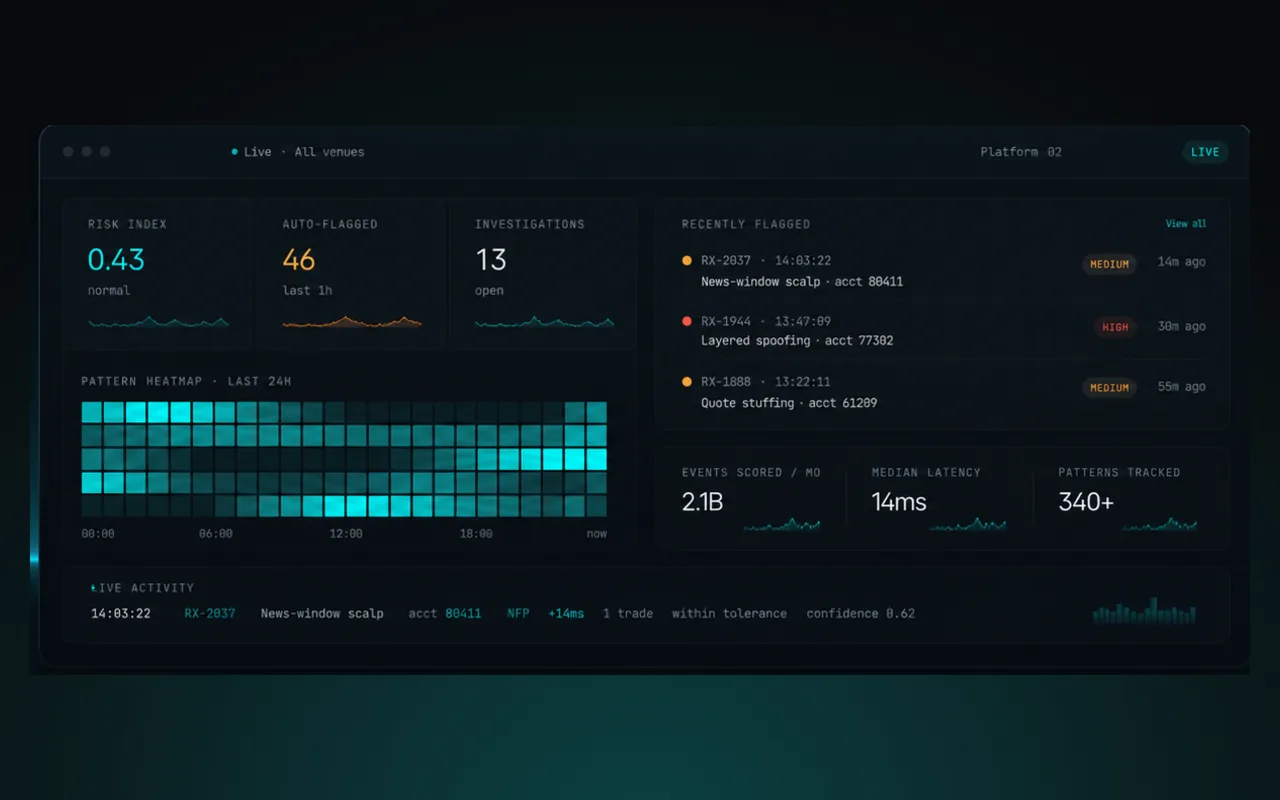
 Product · QuantSentry